Beer Trailer
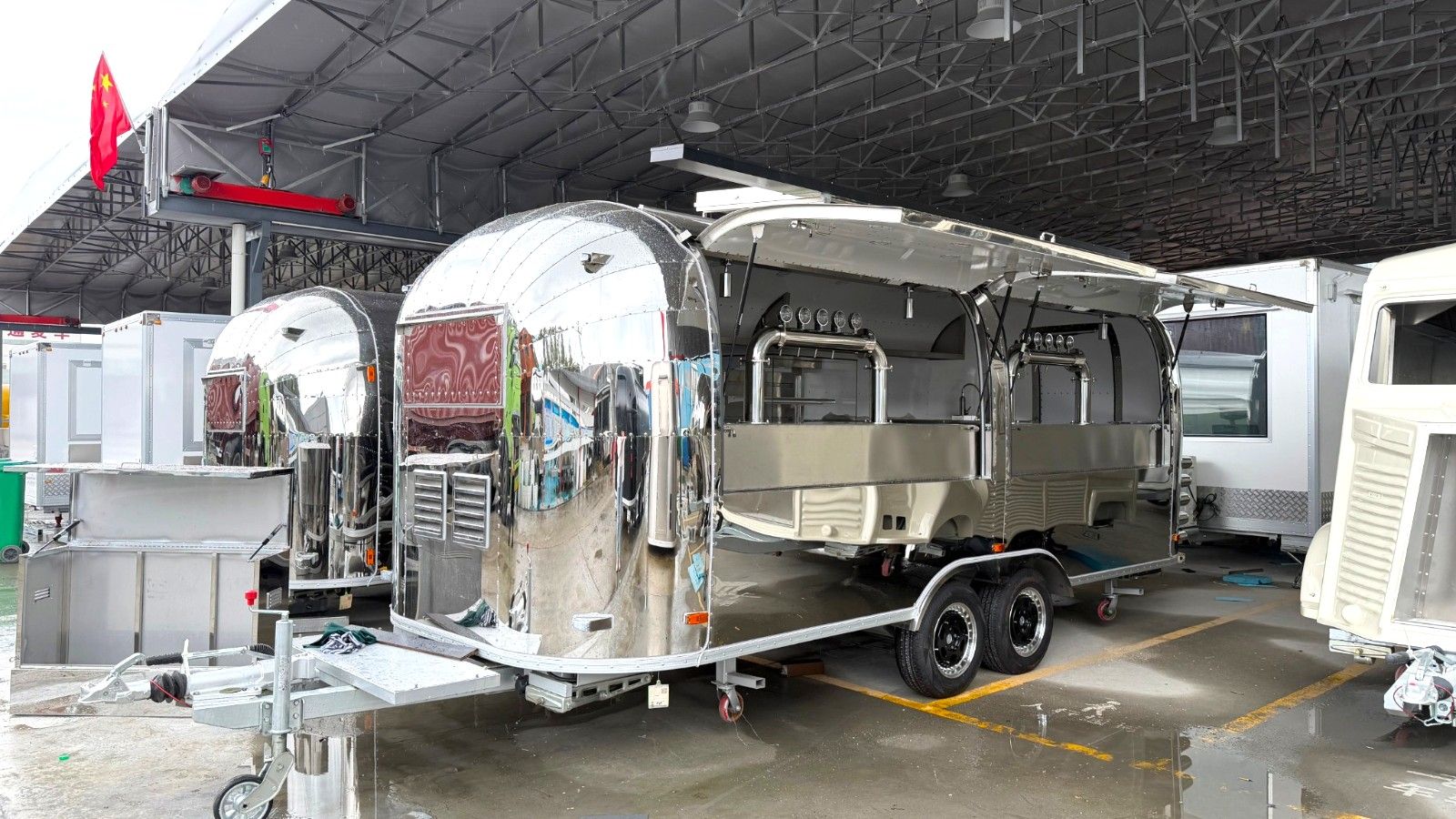
Airstream-based mobile taproom with 4 glycol-cooled taps, COC certified, built for craft breweries on the move.
Mobile Taproom Trailer: How We Built a Rolling Craft Beer Bar
A craft brewery came to us with a simple problem. They didn’t want a second taproom. They wanted to take the beer to the people — festivals, weddings, riverside markets, ski resorts, brewery collabs — without renting a venue or rebuilding a food truck.They didn’t need a kitchen. They needed a draft beer trailer that pours like a real bar, looks like a brand asset, and can be registered on the road.We built it on our Airstream-series shell. Here’s the full breakdown.
1. The Brief: Not a Food Trailer, a Bar on Wheels
Most mobile beer setups start wrong. They buy a generic trailer, bolt a tap tower on the counter, throw in a chest fridge, and hope the foam behaves. It doesn’t.Beer is sensitive. Warm lines, wrong CO₂ pressure, dirty shanks — all of it shows up in the glass. So we treated this build like a closed cold chain, not a decorated box.Client profile:
Independent craft brewery, 6 core SKUs (IPA, lager, stout, sour, wheat, seasonal)
Target scenes: music festivals, private events, pop-up taprooms
No cooking inside — pure beverage service
Needs: 4 taps minimum, cold keg storage, stable pour, easy exterior branding
We recommended the Airstream 5.8m tandem-axle shell with COC certification — road legal in EU markets, easy to tow with a 3.5t van or pickup.
2. Shell and Size
Base model: Airstream-style curved roof, 5,800 mm body length, 2,200 mm width, tandem axle.Why this size:
5.8m gives you a real work aisle, not a hallway
Tandem axle handles the keg weight + glycol chiller + crew
Curved roof reads “premium” from 50 meters away
COC-ready chassis, no reinventing the frame
Exterior: automotive paint in brand color, RAL-matched. LED strip under the service window. Fold-out serving ledge with hidden gas-strut supports.This is the kind of unit that works as a mobile bar trailer and a moving billboard at the same time.
3. Inside the Bar: Layout Logic
We don’t design beer trailers like food trailers. No fryers, no hoods. The priorities are: cold, clean, fast.
Keg vault (rear zone)
Insulated rear compartment, 304 stainless walls
Holds 6 × standard 50L kegs (or 8 × slim 30L)
Pre-chill shelf, separate from serving area
Temperature held at 3–5°C with glycol-assisted cooling
Tap wall (front service zone)
4 forward-sealing stainless taps (Perlick-style)
Glycol trunk lines run inside insulated channels — no warm pipe exposed
Each line has its own regulator: CO₂ for most, N₂ blend option for stout/nitro
Faucets mounted on a 304 bar top, not plastic panel
Utility wall
12V glycol pump + chiller (low draw, quiet)
CO₂ cylinder in locked external bay — not inside the living space
230V shore power inlet, 32A, with RCD protection
Fresh water 25L (handwash only), greywater 25L, separate from beer system
Bar workflow
One person can run it:
Pull glass
Pour from front tap
Set on fold-out ledge
Take payment on tablet
Repeat — no walking into the keg zone mid-service
That’s the whole point. The customer sees a clean bar face. The mess stays behind the wall.
4. Why Glycol, Not Just “Cold Kegs”
A lot of cheap beer carts put the keg in a fridge and run a 2-meter hose to the tap. Fine in a garage. Disaster in July.Beer warms in the line → CO₂ breaks out → foam explosion.Our fix:
Kegs pre-chilled
Glycol loop wrapped on trunk lines
Shanks cooled at the faucet
Pour temp stays 2–4°C even in 30°C ambient
Result: first pint of the day pours like the last pint of the night. No 3-pint waste to clear the line.For a brewery protecting its reputation, that consistency is the product.
5. Compliance and Road Reality
This is where most “cool beer trailers” fail.Ours ships with:
COC certification (EU road registration)
VIN, proper braking, AL-KO-compatible coupling
304 food-contact surfaces, separate handwash sink
Sealed electrical, GFCI/RCD, external drain points
Greywater tank with clean-out
We also flag the local stuff we can’t decide for you:
Liquor license / temporary event permit
Local rules on draft alcohol service
CO₂ storage ventilation requirements
We build the trailer legal. You handle the pour license. Clear split, no finger-pointing later.
6. Branding: The Trailer Is the Marketing
The brewery didn’t want a sign on a trailer. They wanted the trailer to be the sign.So we did:
Full-wrap RAL paint, matte clear coat
Backlit logo behind curved glass
RGB under-glow (switchable, not cheesy)
Magnetic menu board on the service side
Hidden speaker mounts for ambient sound
At a festival, people don’t walk to a bar. They walk to the thing that looks alive. The curved Airstream shell + lit glass + cold mist from the tap window does that job before anyone tastes the beer.
7. Business Math: Why a Beer Trailer Beats a Second Taproom
Rough frame we gave the client:
Brick-and-mortar taproom expansion: high rent, fit-out, staff, permits
Mobile taproom trailer: one-time build, tow it to revenue
Use cases:
Weekend markets (pour-by-glass)
Weddings (fixed fee + consumption)
Brewery collabs (guest taps, no logistics headache)
Brand activations (sampler pours → retail lift)
One trailer, multiple SKUs, zero kitchen labor. Margin lives in the pour.After a summer season, the client ran 40+ events, added a second shell order, and used the trailer as a photoshoot asset for can releases. The unit paid back faster than a seated bar would have.
8. Who This Build Is For
Craft breweries wanting field presence without a venue
Beverage startups launching cider, hard seltzer, kombucha
Event companies renting a “mobile bar” with real draft quality
Hotels/resorts adding a courtyard beer corner
Distributors doing sampler tours
If you sell anything that comes from a tap — beer, cider, cold brew, nitro coffee — the same shell works. We just change the line count and gas setup.
9. Specs Recap
Model base: Airstream-series mobile taproom
Body: 5,800 mm (custom 3.5–7 m available)
Width: 2,200 mm
Axle: tandem, COC certified
Material: automotive paint shell, 304 stainless interior
Taps: 4 (upgradeable to 6)
Keg capacity: 6 × 50L (or 8 × 30L slim)
Cooling: glycol trunk lines + insulated keg vault
Power: 230V shore power / 12V backup option
Service: fold-out window with serving ledge, RGB branding lights
Compliance: EU COC, food-grade surfaces, separate handwash sink
10. Final Word
A beer trailer isn't a novelty. Done right, it's a draft system that happens to have wheels.Cold from keg to faucet. Clean lines. Road legal. Brand-forward. That's the difference between a "cute Instagram cart" and a trailer that actually sells beer.At Chris Machinery, we don't bolt taps to a box. We build the mobile taproom first, then wrap your brand around it.Looking for a custom beer trailer or a mobile bar trailer that pours like a real taproom? Tell us your tap count and target events — we'll send the layout drawing before we cut anything.
Recommended models:
Recommended equipment
Undercounter fridge 1800 · 4-Tap beer machine · Tall fridge 1660
Package equipment from USD 2,050