2026-04-02 · Engineering Team · Buying Guide
Why Do Two "Box-Shaped" Food Trailers Look Identical, Yet Cost So Differently?
The Short Answer
Same shape ≠ Same structure. Same shell ≠ Same lifespan.
A food trailer isn't a garden shed on wheels. It moves. It vibrates. It gets rained on, salt-sprayed, and slammed with temperature swings every single day. What's inside the wall panel decides whether your trailer lasts 6 months or 6 years.
Two Construction Methods. One Looks the Same. One Lasts.
🔵 What We Build: FRP Sandwich Panel Construction
FRP = Fiberglass Reinforced Plastic. It's the same material used in marine boats, RV sidewalls, and refrigerated semi-trailers.
🔴 The Budget Alternative: Color Steel Rock Wool Panels
Often used for fixed site sheds. Rarely built for the open road.
Core Material Breakdown
🔵 FRP + PU Sandwich Panel (Our Standard)
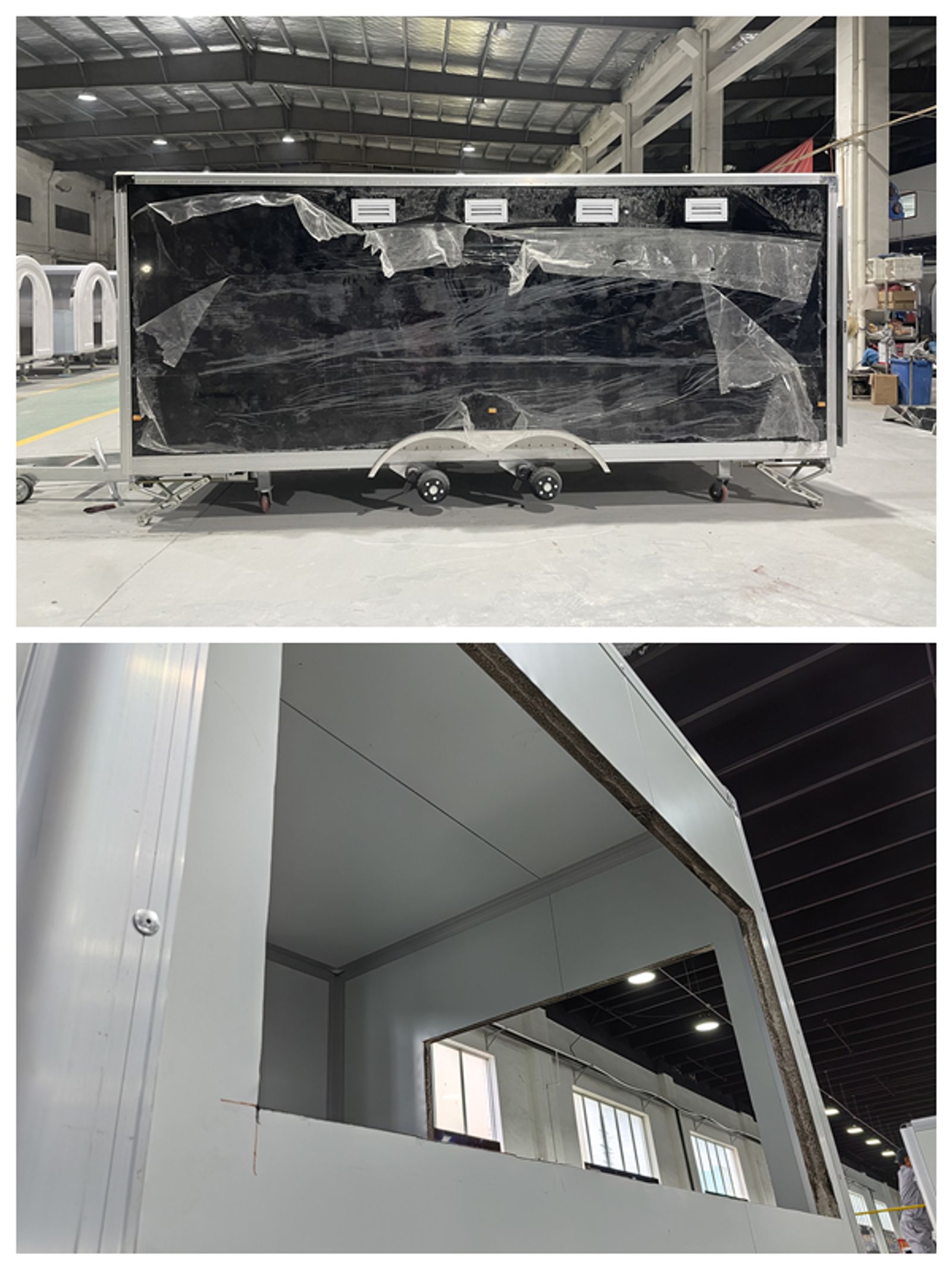
Outer Skin: 2mm Fiberglass (FRP) gelcoat – smooth, rust-proof, boat-like finish.
Core: Polyurethane (PU) foam (λ≈0.023) + 3mm plastic stiffener layer.
Structure: Pre-embedded galvanized steel frame & electrical conduits. Hot-pressed with 150°C adhesive.
Result: Lightweight (half the weight of steel), vibration-resistant, no rust, easy to wash.
🔴 Color Steel + Rock Wool (Budget Standard)
Outer Skin: 0.4–0.6mm corrugated color steel (metal wave pattern).
Core: A-grade rock wool (dense, heavy, absorbs water at edges).
Structure: Standard tongue-and-groove panels, often no internal skeleton. Site-caulked.
Result: Heavy, hollow feel. Seams crack from vibration. Metal scratches = rust.
How to Tell Them Apart (Even in Photos)
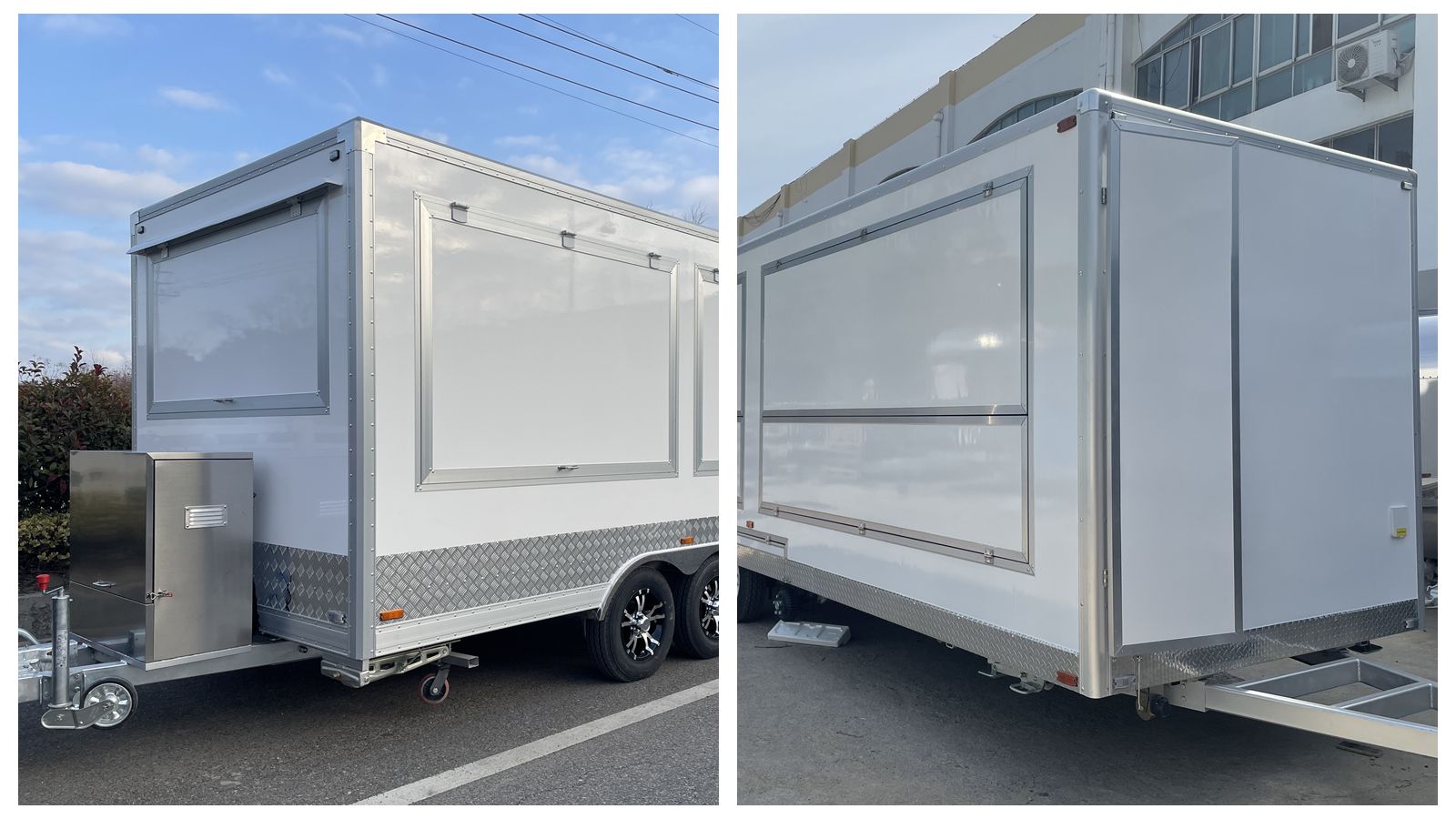
Surface Feel: FRP is smooth like an Airstream. Steel is corrugated/rippled.
Corner Treatment: FRP uses clean aluminum extrusions. Steel uses butt-joined panels with sanded paint & caulk.
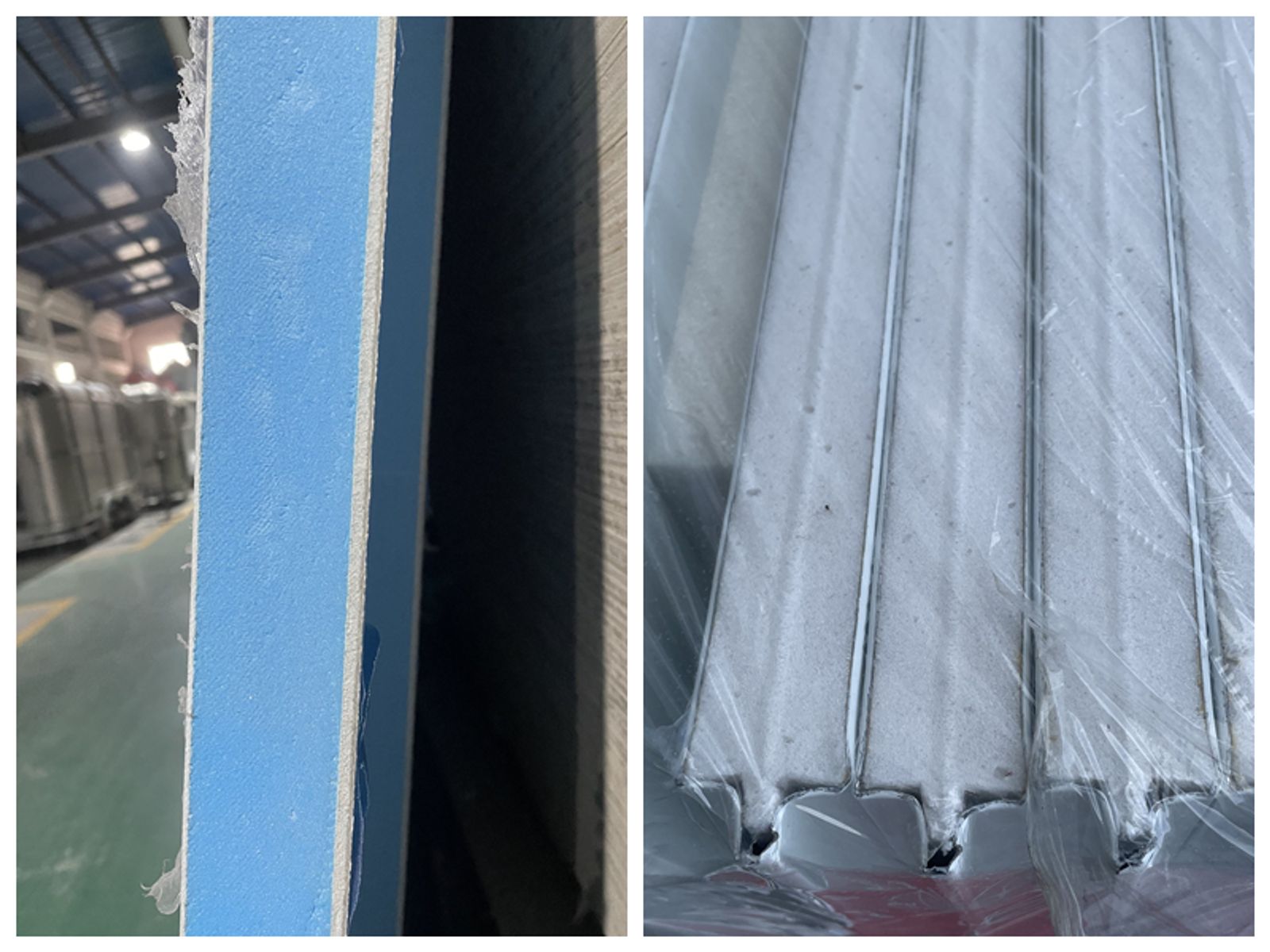
Cut Edge (Ask the seller!): FRP shows blue/white PU foam. Steel shows grey rock wool + thin metal.
Knock Test (Inside wall): FRP has a solid frame feel. Steel sounds hollow/empty.
After Rain: FRP beads water, never rusts. Steel seams darken, scratches turn orange fast.
The Real Cost Breakdown
🔵 FRP Build (Ours):
Panel material ($25–35/㎡) + Pre-embedded frame + Pre-run wiring + 150°C hot-press = ~$1,600–2,500 total system cost per 6m trailer.
🔴 Steel Build (Budget):
Panel material ($11–17/㎡) + No frame + Site labor for wiring/sealing = ~$700–1,100 upfront.
The Hidden Truth: You save ~$900–1,400 today with steel. But risk seam leaks/electrical shorts in Year 2, and watch rust kill resale value. That "saving" becomes a $5,000 problem in 18 months.
Which One Should You Choose?
✔️ Choose Steel Panel If… Your trailer stays fixed in one spot, budget is #1 priority, local fire code demands A-grade rock wool, and resale value doesn't matter.
✔️ Choose FRP Build If… You tow regularly, need 3+ years of operation, face road safety/fire inspections, want strong resale/export potential, or deal with coastal/humid routes.
Our Position
We can build the cheap version. But once you've seen a steel-panel trailer after one winter on the coast—or one summer of daily towing—you don't unsee it. We build trailers that look as good in Year 4 as Day 1. That's FRP monocoque construction.
Want to See the Difference?
Request a panel cut-sample (real 20×20cm cross-section, not a photo).
Ask for a video walkthrough of our hot-press production line.
Get the spec sheet (material certs, adhesive data, fire compliance).
Same box shape. Completely different DNA.